

Tippy
Exploring a shareable tipping link that connects creators with support from their audience in naira.
- Role
- Fullstack
- Year
- 2026
- Industry
- Creator tools
- Platform
- Web

01 / Overview
The context
Tippy gives creators a link to share with people who want to support their work. The public site describes naira tips, optional notes, and bank payouts. This fullstack exploration focuses on creator identity, supporter intent, and a payment interface that explains each step.
What I worked on
- Exploring the creator-to-supporter journey.
- Drafting amount, note, and payment-feedback states.
- Structuring reusable profile and form components.
02 / A closer look
The work, in detail.
01 / Journey
Turning a shared link into a clear next step
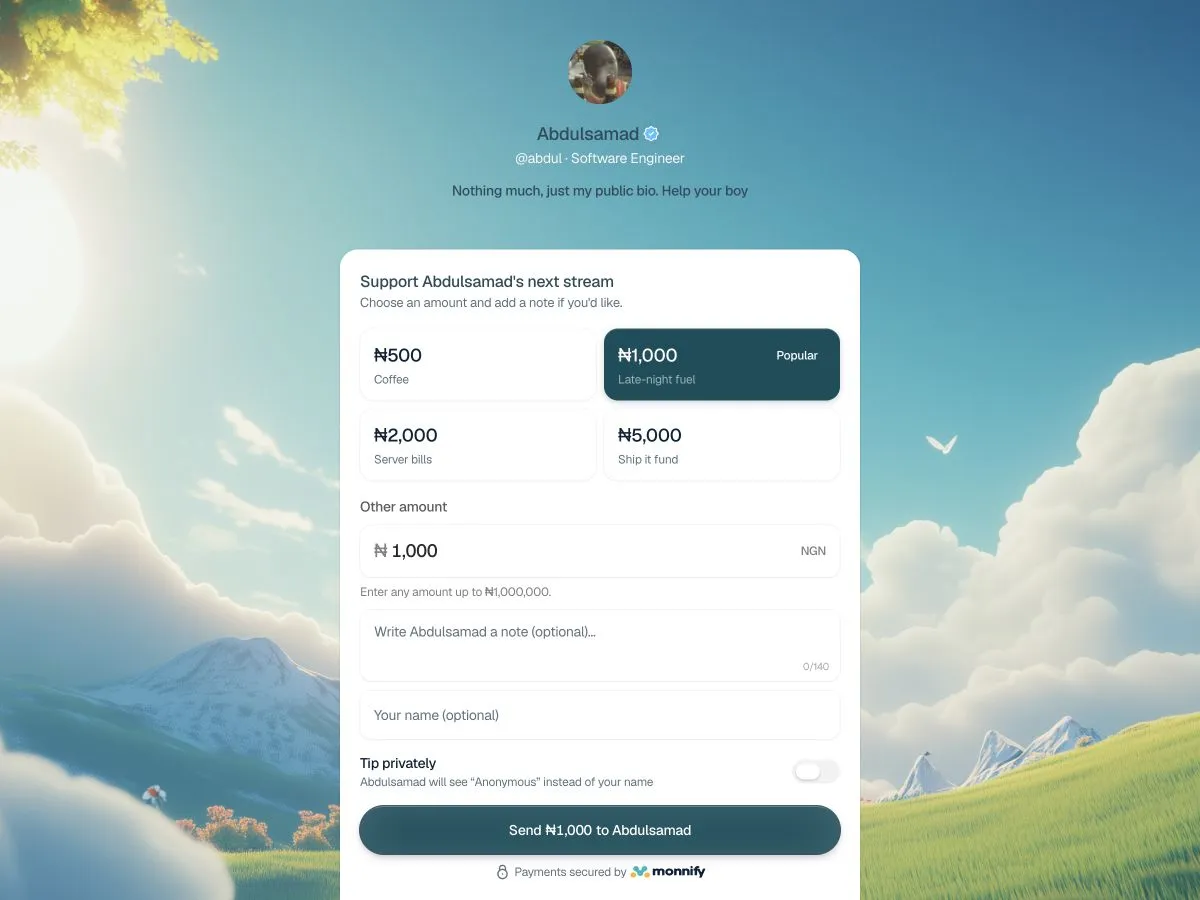
The public sample page pairs Abdulsamad's profile image, handle, and bio with an invitation to support his next stream. I framed the exploration around preserving that creator context, so the amount form stays connected to the person a supporter came to see.
Four presets connect naira amounts with labels such as Coffee and Server bills, alongside a custom amount. A supporter can add a note, enter a name, and choose privacy. The primary button repeats the selected amount and recipient before the journey continues toward payment.
- Open the creator link
- Choose an amount
- Add an optional note
- Continue to payment
02 / Interaction
Making the amount and payment state explicit
The draft interaction model keeps preset selection and custom amount entry synchronized, with the chosen naira value reflected in the action. The optional note shows a 140-character counter. Amount changes preserve that note, the supporter's name, and the privacy choice instead of resetting the form.
The page's Monnify attribution identifies the payment provider; status feedback explains the current result. I kept editing, submitting, waiting, and confirmed outcomes distinct in the proposed flow. After an interruption, feedback explains what is known before inviting another action.
- Keep privacy explicit
- Treat private tipping as an explicit choice, with a visible switch state that survives changes to the amount or note.
- Confirm the outcome
- Reserve success feedback for a confirmed result and distinguish an interrupted attempt from a completed tip.
03 / Architecture
Separating creator identity from the tipping flow
I divided the interface concept into a creator profile, a tipping form, and payment feedback. The profile provides context; the form owns editable values; feedback communicates progress. These boundaries let the creator's presentation change independently of how a supporter completes the form.
The reusable pieces are intentionally small: profile identity, amount input, optional message, primary action, and status notice. Each has a clear responsibility. The tradeoff is explicit composition instead of one highly configurable profile card that also manages every form variation and payment state.
- Separate display from state
- Keep creator information independent from editable tip values so presentation updates do not discard the supporter's input.
- Share behavior deliberately
- Use one amount and status pattern wherever the flow appears, while letting each page compose its surrounding context.
04 / Responsive
Keeping the tipping task comfortable on a phone
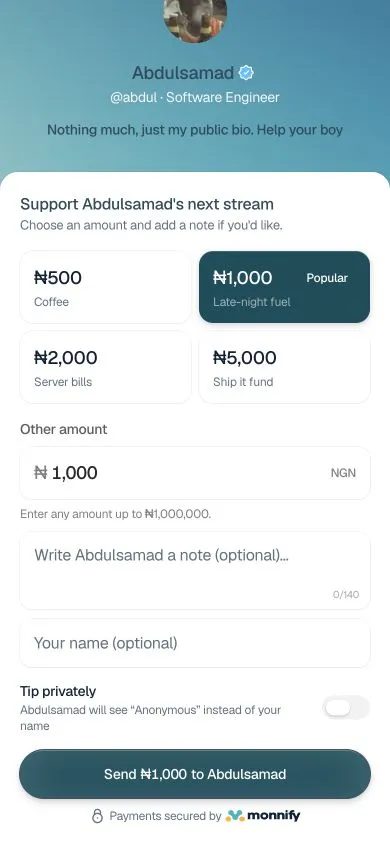
The mobile sample stacks creator identity above the tipping form. I treated that arrangement as the task sequence: recognize the person, choose an amount, then complete the supporting fields. Preset amounts and privacy controls need comfortable touch targets without crowding their labels.
The keyboard changes the available space when someone starts typing. Amount entry, message editing, and feedback need to remain usable without covering the focused control. Long creator names and multi-line notes need room to wrap while keeping the payment action easy to locate.
05 / Quality
Reviewing the boundaries of a small form
I organized the proposed review around opening a creator link, changing an amount, editing a note, and returning after an interrupted step. The cases include an empty amount, unexpected characters, a long message, and a slow response during the payment transition.
The same pass covers keyboard focus, field labels, the note counter, and narrow layouts with the keyboard open. The review also checks whether amount and recipient remain clear in the action, and whether feedback reflects the information actually available.
03 / Looking back
Outcome & reflection
Tippy's public experience connects a shareable creator identity with a focused tipping journey. The exploration examines the form and feedback decisions that support that interaction, from a supporter's initial intent through the presentation of payment status.